
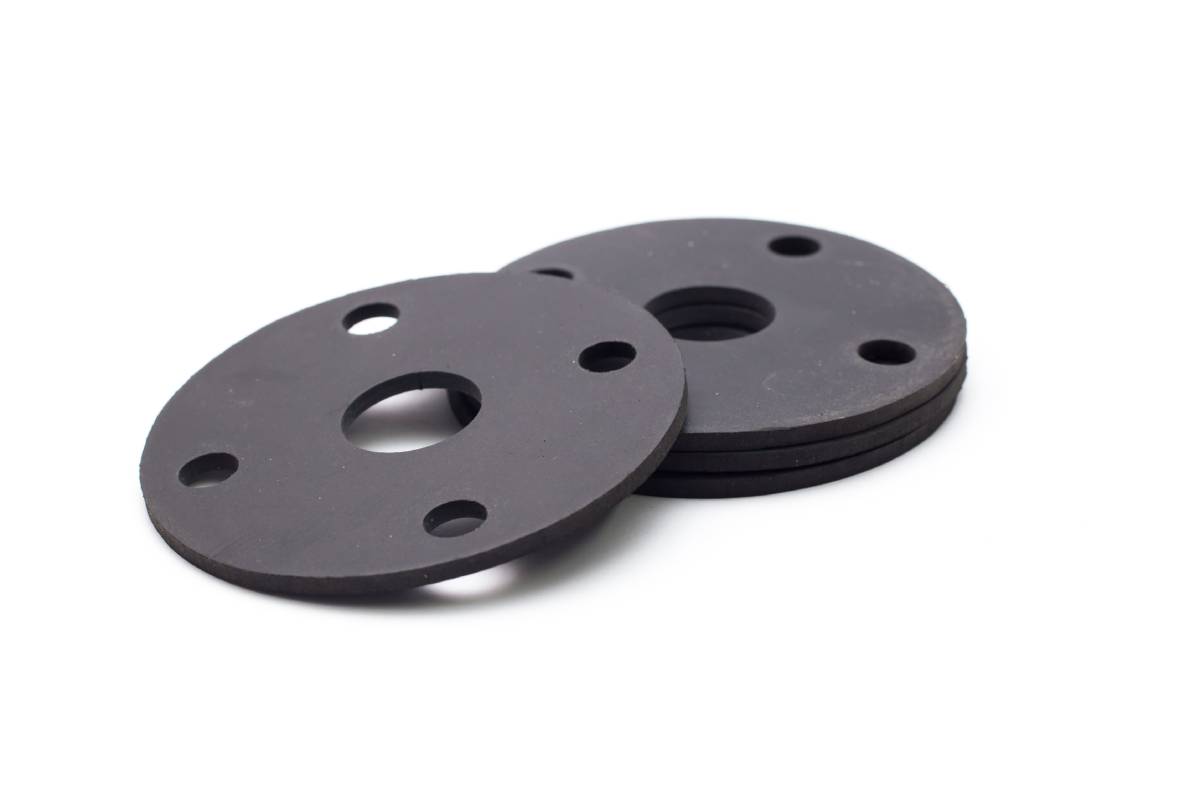
22 Dec What Are Molded Gaskets?
Molded gaskets are custom-made seals formed by pressing rubber or similar materials into specific shapes. Think of them like making ice cubes—the material is poured into a mold and takes that exact shape as it sets. This creates a seal shape that fits specific equipment perfectly.
When it comes to keeping fluids in, dirt out, and pressure steady wherever two parts meet, these custom gaskets work efficiently. You’ll see them working hard in pumps, valves, engines, compressors, and just about anywhere else a reliable seal makes the difference between smooth operation and a messy problem.
How Molded Gaskets Are Made
Molded gasket manufacturing starts with selecting the right rubber or elastomer compound. Our I.B. Moore Manufacturing engineers choose materials based on temperature resistance, chemical compatibility, and compression requirements. The most common options for conditions like those include nitrile, silicone, EPDM, neoprene, and fluorocarbon compounds.
The material goes into a heated mold that’s formed exactly like the finished gasket needs to be. Heat and pressure work together to cure the rubber, hardening it into the precise shape. This method produces parts that are consistently accurate, meeting the standards our clients rely on. Molding can produce anything from basic O-rings to complex shapes, or even gaskets with built-in features such as bolt holes and tabs for mounting.
When to Choose Molded Gaskets Hand-Cut
Molded gaskets have the same thickness and density throughout the entire part, which means they seal more reliably and last longer than gaskets cut by hand. They’re also more amenable to complicated shapes: If you need curved profiles, multiple sealing surfaces, or built-in mounting features, molding gets these details right every time. You won’t need extra steps like drilling holes or cleaning up edges afterward.
The process also reduces waste material, which is common when cutting gaskets from sheets. Each gasket utilizes only the material it needs, which reduces your cost per piece when ordering in larger quantities.
Choosing Custom Gasket Materials
The I.B. Moore team knows that picking the right material is one of the most critical steps in getting a gasket that works. Different rubbers handle different temperatures — from freezing to sustained heat above 400°F. You’ll also need to match the compound to whatever fluids or gases it contacts.
The material also affects how your gasket performs under pressure. For instance, compression set resistance measures how well it bounces back after being squeezed. Materials like silicone and fluorocarbon retain their shape over time, while less effective compounds remain compressed and lose their seal.
Material hardness must also be considered. Softer materials, such as low-durometer EPDM, conform to uneven surfaces but can squeeze out under high pressure. More complex compounds, such as high-durometer nitrile, resist extrusion but require tighter bolts to compress and seal properly.
When Molded Rubber and Elastomer Parts Make Sense
Molded gaskets are ideal when you need the same part repeatedly. The upfront cost of creating the mold gets spread out across multiple orders, which brings down the price per piece. For smaller production runs, compression molding is the ideal solution. When you’re making thousands of small, precision parts, injection molding is the better choice.
Custom gaskets are worth it when standard, off-the-shelf options don’t fit your equipment right. A gasket that doesn’t fit properly leads to leaks, unexpected downtime, and constant maintenance headaches. Getting parts made to your exact specs solves these problems.
Molded rubber and elastomer parts also make sense when you need every gasket to perform uniformly. The controlled manufacturing process results in less variation from one part to the next, ensuring consistent and reliable performance across your entire order.
Working With I.B. Moore Manufacturing
Successful custom gasket projects start with good communication. When you share detailed information about your application’s critical dimensions, tolerances, and special features, it helps us understand exactly what you need. Tell us about your operating temperatures, pressures, and chemical exposure, and we’ll have a clear picture of the challenges your gasket needs to handle.
From there, we recommend the right materials and suggest design improvements that boost performance or lower costs. We handle mold creation, material selection, and quality testing so that the parts meet your specifications. Our engineering team will analyze your specific sealing challenges and then develop custom gaskets to solve them.
Stop Settling for Gaskets That Don’t Fit
Your equipment shouldn’t leak or experience premature failures due to generic parts. I.B. Moore Manufacturing creates molded gaskets engineered to customer specifications, leveraging materials selected to perform optimally in specific operating conditions. Contact our Lexington, KY, team for nationwide service.