
22 Dec Aerospace O-Rings and Gaskets: Reliable Sealing for Flight Systems
When aircraft climb to cruising altitude or spacecraft launch into orbit, there’s no room for equipment failure. Every component must perform flawlessly because lives and missions depend on it. Sealing solutions are some of the most critical parts in these systems, and I.B. Moore Manufacturing designs and builds them to exacting standards. Aerospace O-rings and gaskets may be comparatively small, but they stand between safe operation and disaster. These seals keep fuel where it belongs, maintain cabin pressure, and stop contaminants from damaging sensitive equipment.
Aerospace Gaskets, O-Rings, and Extreme Conditions
Aircraft engines operate under extreme conditions; temperatures can swing from freezing cold at high altitudes to scorching heat near combustion chambers. The fuel systems must remain leak-free to prevent fires, and the hydraulic lines need perfect seals to control landing gear and flight surfaces. Even a tiny gap can lead to pressure loss, fluid leaks, or system contamination that puts lives at risk.
Spacecraft and satellite aerospace gaskets face similar challenges. In the vacuum of space, materials experience temperature extremes that would destroy ordinary seals, while rocket fuel systems demand seals that resist highly corrosive chemicals. Just as importantly, life support systems in crewed vehicles require absolutely reliable sealing to maintain breathable air.
Aerospace O-Ring Shapes and Profiles
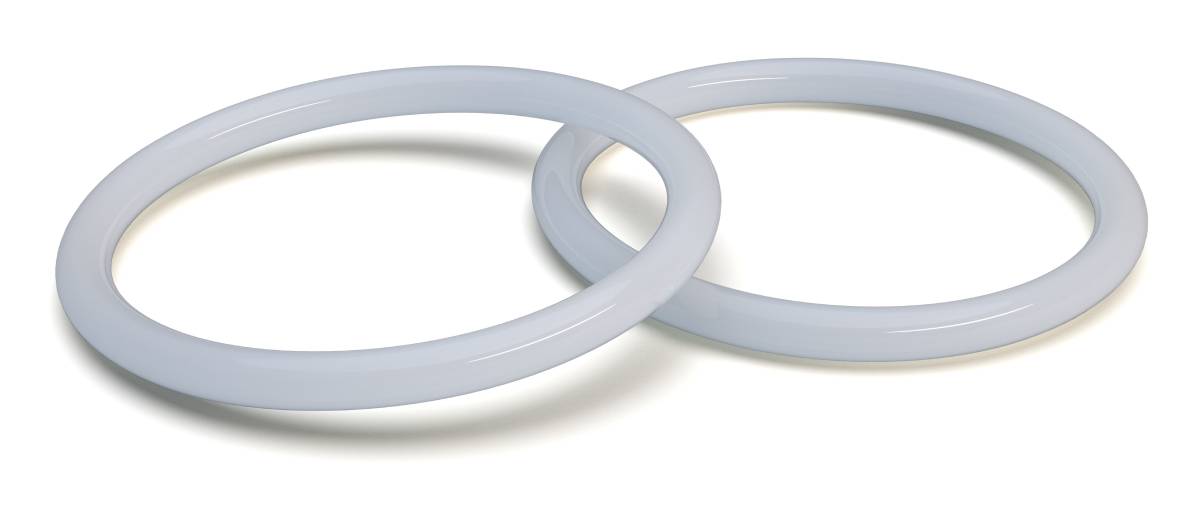
O-rings get their name from their circular cross-section, which creates an effective seal when compressed between two surfaces. Our I.B. Moore Manufacturing engineers also use other seal shapes to address aerospace industry sealing applications.
- X-rings have four sealing lips instead of one, delivering better performance in dynamic applications where parts move against each other. This design cuts down on friction and keeps the seal from twisting during operation.
- Square and rectangular seals work well in static applications where parts stay put. These shapes handle higher pressures than round seals in certain installations.
- T-shaped seals fit into special grooves and resist extrusion under extreme pressure.
Our engineers choose the right profile by considering groove design, pressure levels, temperature range, and whether parts will move during use.
Material Selection for Aerospace Gaskets
Standard rubber won’t survive in these extreme conditions. Aerospace gaskets typically use specialized elastomers engineered for these environments. Viton fluoroelastomer resists jet fuel, hydraulic fluids, and high temperatures up to 400°F; silicone seals stay flexible at temperatures as low as -65°F, making them ideal for high-altitude applications.
EPDM rubber works well with oxygen systems and certain coolants, while nitrile seals resist petroleum-based fluids and stay flexible across a wide temperature range. When applications get more demanding, PTFE (Teflon) seals can handle temperatures exceeding 500°F and resist nearly all chemicals.
Temperature and chemical compatibility aren’t the only things that our engineers need to consider. Some applications require seals that won’t outgas in vacuum conditions — a key concern since released particles can contaminate sensitive instruments. Other situations call for gasket materials that meet strict flammability standards or can withstand radiation damage in space environments.
Custom O-Ring Kits for Complex Aerospace Systems
A single aircraft might use dozens of different seal sizes throughout its fuel, hydraulic, pneumatic, and environmental control systems. Standard catalog seals work for many applications, but aerospace systems need specialized solutions. I.B. Moore Manufacturing custom O-ring kits allow us to specify exact sizes, materials, and tolerances for our clients’ specific applications.
Custom gaskets will seal complex surfaces that standard O-rings can’t handle. Spiral wound gaskets combine metal and filler materials to withstand high-pressure flange connections, while metallic gaskets crush slightly during installation to create gas-tight seals in extreme conditions. For irregular surfaces where pre-made seals are not suitable, formed-in-place gaskets provide the flexibility to conform to unique geometries.
Aerospace Gaskets: Beyond Shape and Material Selection
Proper installation matters as much as shape and material selection. The grooves must have the correct dimensions to compress the seal adequately without overstressing it. Additionally, surface finishes need to be smooth enough to prevent leaks but not so polished that the seal can’t grip properly. Sharp edges can cut seals during installation or operation, so engineers design chamfers and radiused corners into mating parts to prevent this.
Backup rings, another vital consideration, prevent seal extrusion in high-pressure applications. These harder rings sit behind the softer seal, supporting it against the wall of the groove. Ultimately, dynamic applications benefit from lubrication to reduce friction and extend the life of seals. However, the lubricant must be compatible with the seal material and the system fluids.
We’re Your Partner for Aerospace Custom Gaskets
Our I.B. Moore Manufacturing engineers tackle the sealing challenges of aviation and space systems, from material selection to custom O-ring kits. We manufacture precision seals that meet stringent aerospace standards, ensuring your systems operate safely. Contact our Lexington, KY, team for nationwide service, and we’ll explain how our expertise will support your next project.